Photographing the Milky Way (Part 2)

Last June, I blogged about my first attempt at capturing a shot of our own galaxy – the Milky Way. Earlier in September I headed out again into the wild on a dark moonless night, for another round of astro photography. This time around I had high hopes of getting a shot of the Andromeda galaxy, the nearest galaxy to our own, which around September starts showing up in the early night hours just above the horizon. Unfortunately I failed miserably, as the lens and technique that I ended up using, didn’t really cut it.

The night however didn’t completely go to waste. Prior to my trip to Italy this summer, I mentioned that I had purchased a Sigma 10-20mm ultra wide angle lens. This lens is great for landscapes, but it is equally good when it comes to astro photography. At its widest setting (10mm), this lens can stay open for nearly 40 seconds on an APS-C camera such as my own, without capturing any trails. The trick here is that the closer you zoom into a star, the easier it is to detect the trail of the star caused by the earth’s rotation. Time is key here, because you want the shutter to stay open for a longer period of time so that you can record as much light (and hence more detail) as possible without at the same time capturing any trail.

Here is the result of my second attempt at the Milky Way with my new Sigma lens.
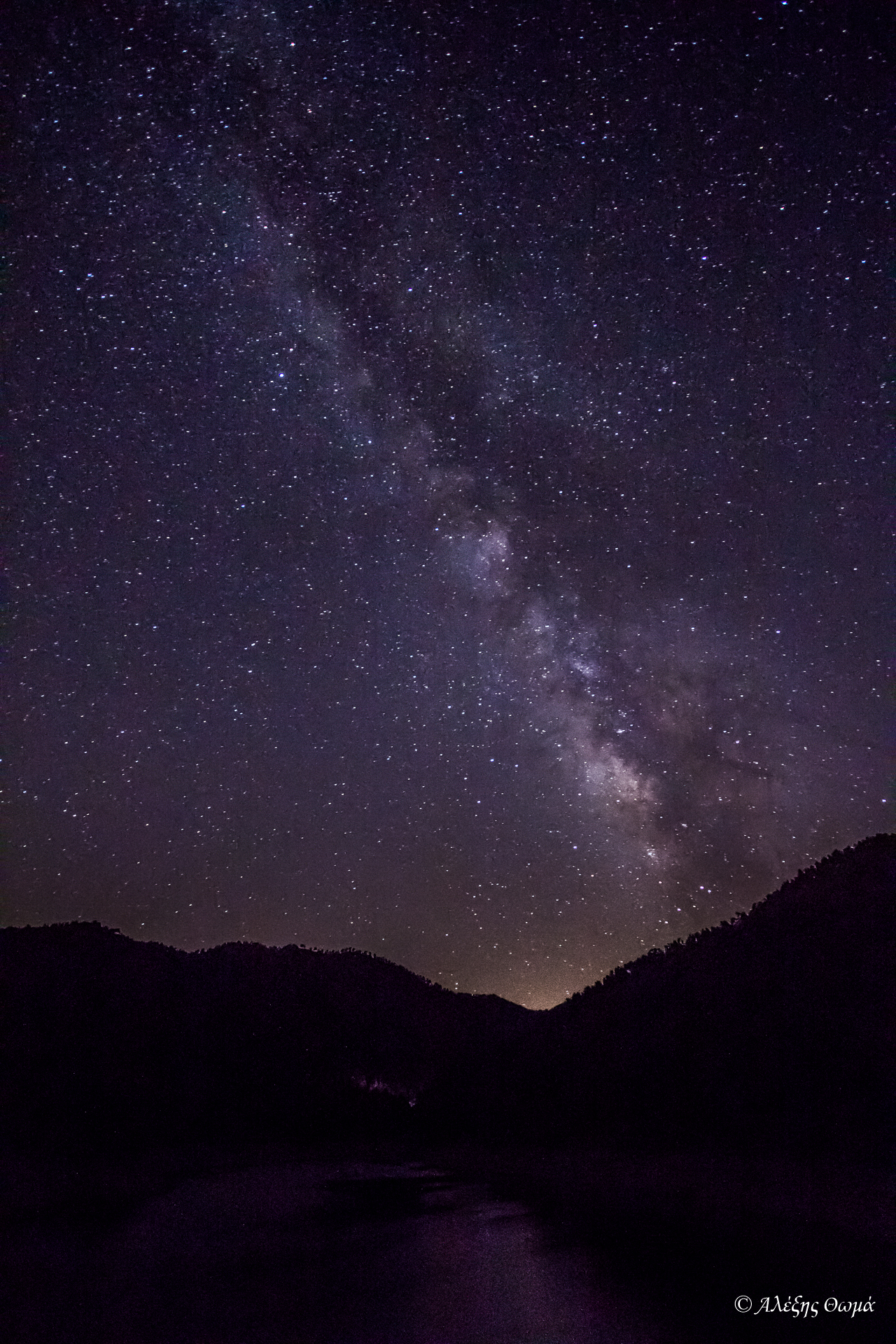
Milky Way - 1920c

Shot with my Canon 60D and my Sigma 10-20mm F4-5.6 DC HSM lens, at ISO 3200, F4.0, 35 secs.

Venice Sunset

Most photographers are suckers for a good sunset picture…and admittedly I am no different. What’s great about a sunset (and sunrises alike), is that during these so-called golden hours, the light is more diffuse thus reducing the hard shadows you would normally get in mid day. The colours also are much warmer, especially during twilight, and when combined with an interesting background (such as a cloudy sky), it makes landscape photographs even more compelling.

Getting a good one is no easy feat however. This is one of my many attempts at getting a decent sunset during my recent trip to Venice, Italy. Not sure I managed to get it right, especially given that I had no tripod and my camera had to rest on the side of a bridge!

Venice sunset - 1920c

Taken with my Canon 60D and Sigma 10-20mm F4-5.6 DC HSM lens, at ISO 200, F8.0 @ 6 secs (bracketed at -2/0/+2).

Getting to water

Off to Burma next week, for a full week’s worth of work. In anticipation of my upcoming trip, I decided to quickly scan through my photo archive from my last visit. As I was going through the archive, this picture jumped out at me. I wish I could say that this was taken by a war time photographer some 70 odd years ago. This unfortunately was taken last September during my day tour in the old capital city of Yangon (Rangoon). Hard to imagine that this was 2012 and that children still live in these conditions. Myanmar Water Boys - 1920c

Taken with my Canon 60D and Canon 24-70 F2.8L lens, at ISO 200, F2.8, 1/500 sec. B&W conversion done in Lightroom 5 using Silver Efex Pro 2.

Perfume Scent

Just north east of Venice, and only a few minutes away on the Vaporetto, is the island of Murano. This island is world famous for its glass making, and while there I had the chance to witness first hand the skills of the local artisans, by attending one of the many shows that were available for the visiting tourists.

I am not big on souvenirs, because I truly believe that the best memento I can get from any place I visit, is a decent selection of photographs showcasing the best the region has to offer. I did however break my rule this time around, when I walked into one of the many glass shops and saw this tiny perfume bottle. Believe me when I say that I have no practical use for this bottle, but what compelled me to purchase it was my immediate thought of photographing it with smoke coming out of its nozzle! For me this isn’t really a new idea, as I have tried smoke photography before with a coffee cup and a cow milk container (see link). Nonetheless, here is yet another attempt, the final result of which is fairly close to what I initially had in mind.Perfume bottle - 1920c

This is a composite of two separate photographs – one of the smoke and one of the actual bottle.

Smoke: Taken with my handheld Canon 60D and Canon 24-70mm F2.8L lens at ISO 100, F13, 1/250th of a sec.

Perfume Bottle: Taken with my tripod mounted Canon 60D and Canon 100mm F2.8 lens at ISO 100, F16, 1.3 sec (with +2 1/3 ev)

Rainbow Windows

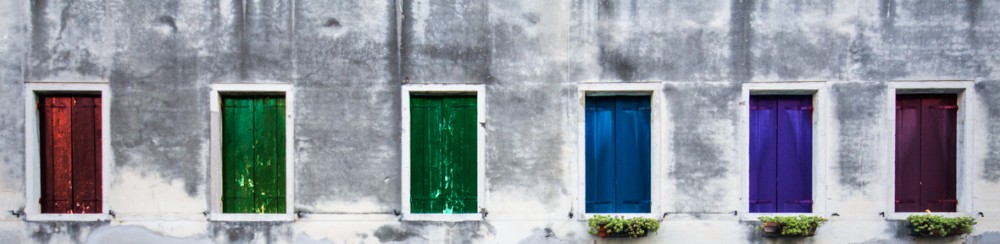
To mark my 50th post on this blog, it’s time for a small facelift! Time to switch up the header image into something a bit more colourful!

One of the key ingredients to getting a decent picture, is proper composition i.e. how to best frame the shot. When I started reading my first photography book, the first chapter was all dedicated to explaining some basic principles one generally has to follow to properly compose a photograph. I’ve read about the rule of thirds, leading lines, foreground interest etc, but for some reason my favourite one is patterns. Can’t explain it really – but somehow the ability to capture patterns either natural or man-made, always brings a natural rhythm and harmony to photographs.

This is a picture I took on my recent trip to Venice. Admittedly though, I got in and tampered with it a bit in Photoshop, as the original one captured had all windows in a uniform deep green colour. There was nothing wrong really with the original picture, but since I wanted something cheerful to uplift the face of my blog page, I thought appropriate to add some colour in post production.

Rainbow windows - header

Taken with my Canon 60D and Sigma 10-20mm F4-5.6 DC HSM lens, at ISO 100, F8.0, exposed at 1/60th of a second. Processed in Photoshop CS6.

Tuscan Landscape

Just got back from a 10-day vacation in Italy where I got the chance to drive around Tuscany for the first week followed by a visit to Venice for the last stretch of the trip. Had a great time there, with the highlights being the great scenery, the wine and definitely the food…ah yes, the food..what the heck do they put in that pasta that makes it so tasty!?

In preparing for this trip (from a photography perspective), I’ve read countless articles online about the great Tuscan landscapes, with the endless fields of grass, the iconic cypress trees and the variety of colours in nature. Unfortunately, I also read that the best time to visit Tuscany is either spring or autumn, which was somewhat disheartening given the timing of my trip in mid-August. Nonetheless I wasn’t discouraged, to the point where I made an impulse (yet relatively inexpensive) purchase of a new ultra-wide angle lens (Sigma 10-20mm F4-5.6 DC HSM), which would be perfect for this type of landscape scenery.

I first got the chance to put this lens into good use, when I passed by this endless field of sunflowers, near the village of San Gimignano (half way between Florence and Siena). I immediately jumped out of the car with my tripod and started running into this field, being careful not to step over the flowers. The composition was tricky, as I was trying to shoot straight into the sun. I stopped down my aperture to get the sun look more like a starburst, and fitted a 3-stop ND grad filter to bring back the sky. Unfortunately, I got significant flaring on my lens, but to be honest I don’t mind it that much!

Sunflowers - 1920c

Shot with my tripod mounted Canon 60D and Sigma 10-20mm F4-5.6 DC HSM lens, at ISO 100, F18, and bracketed at -3/-1/+3.

Explosion of light!

After a successful attempt at photographing an unplugged light bulb, I decided that my model was destined for bigger and better things. In this new photo-shoot (a journey of no return), I placed the bulb in a zip lock bag, then used a hammer to break the outer part, crossing my fingers that the filament would remain intact.

I then hooked up the bulb onto the electrical rig that I had built for my previous experiment, secured my camera on the tripod, and dialed in the continuous shooting mode. With one hand on the electrical switch and the other on my remote cable release, I turned on the power and fired 5-6 continuous shots. The result is the picture below – the final grande portrait and a testament of my subject’s short-lived modeling career.

Filament Lamp - 1920c

Shot with my Canon 60D and Canon 24-70 F2.8L lens, manual settings at ISO 200, F5.6, at 1/1000 sec.

Flying Kiwi

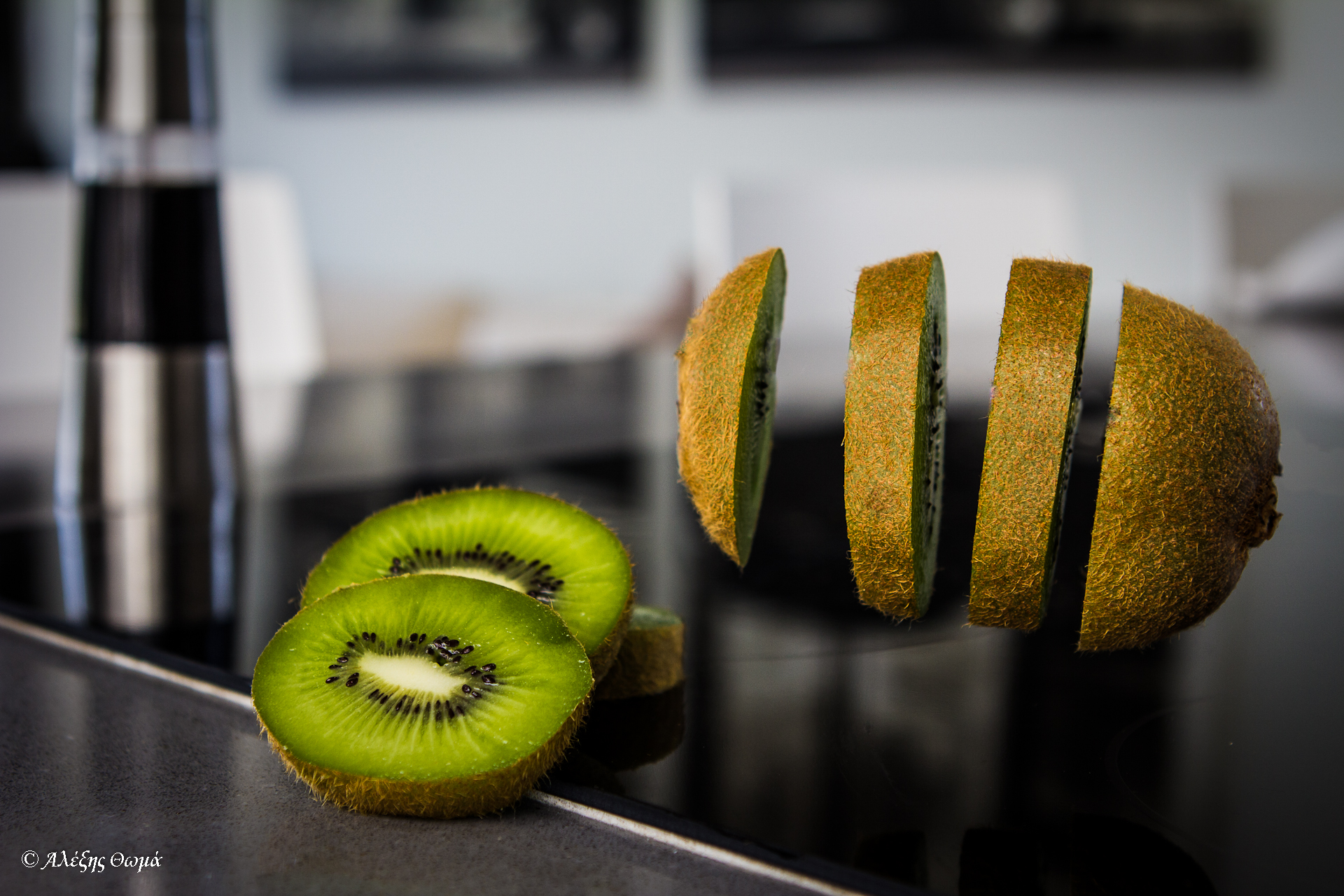
Another hot weekend in Nicosia…what can a man do other than stay home, blast the A/C and levitate some fruit! Continuing on my quest to enhance my Photoshop skills, I took on this fairly trivial project of making pieces of fruit seem like they are floating in mid air. All it really takes is a tripod and a victim – in this case some pieces of sliced kiwi.

As a first try, I think it came out quite well. I do want to give this another round, only next time make the set up a bit more elaborate with multiple pieces of fruit being tossed up in the air. Given that we are still half way through the summer, I am pretty sure the opportunity will arise fairly soon….

Flying Kiwi - 1920c

Taken with my tripod mounted Canon 60D and Canon 24-70 F2.8L lens, at F4.0, ISO 200, 1/125 secs.

Knock knock…

My apartment is located in Engomi – a relatively small municipality of 18,000 residents, just a short 5-minute drive from the center of Nicosia. Over the last few years, the area has undergone a fair bit of a transformation, with many cafes and hip bars opening in every corner – the result of urban decentralisation that has left the city center almost completely empty.

Despite the new developments, the old part of Engomi situated at the core of the municipality and only steps from where I live, remains relatively intact. The narrow streets and the old mud brick houses give the area a bit of a character, reminiscent of the quiet and picturesque neighborhood it once was.

Every morning as I drive to work, I always pass by this old mud brick house. The front door of this house is literally on the street, and my car is always so close to scraping the door as I struggle every morning to make the tight corner. Its rusty door handle has always picked my photographic curiosity, so I decided to pass by on foot the other day and take a picture.

Door Handle - 1920c

Taken handheld with my Canon 60D and Canon 24-70 F2.8L lens at ISO 800, F5.6 @ 1/40 sec.

Let there be light!

Staying in Nicosia on a blistering hot Saturday morning, is definitely quite painful. With nothing else to do, I decided to stay in, put the A/C on max and keep myself entertained with another photography project. This weekend’s inspiration comes from another one of my favourite photographers/tutors – Gavin Hoey. Gavin has an excellent website with lots of tips and tricks on photography, but unlike many others, his tutorials apart from teaching you various photography techniques, they take it a step further by teaching you how to best enhance or manipulate these images in Photoshop.

Over the last few months I’ve started learning various post production techniques in both Photoshop and Lightroom. Even though I am a big proponent of getting everything right in camera, there is definitely value in learning how to use these tools, either to overcome the various limitations of cameras e.g. colour saturation, incorrect exposure readings etc, or to simply manipulate images to create some artistic results. After-all, post production has been around as long as cameras, only difference is that in the older days things used to be done in dark rooms instead!

The cool thing about this project, was the fact that I had to put my electrical wiring skills to work, so that I could control the intensity of the bulb using a dimmer switch. After I managed that (see link), I took a picture of the lit bulb, a separate image of the bottom part of the bulb, and then imported everything into Photoshop for some basic manipulation – essentially fit the two together, making the bulb seem as if not wired at all….and here is the result!

Light Bulb2 - 1920c

Taken with my tripod mounted Canon 60D, 24-70mm F2.8L lens, ISO 100, F8.0 at 1/8 sec.